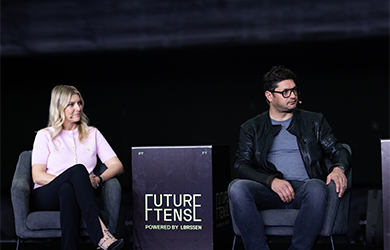
In the world of lighting design, we often see only the final outcome — a perfectly illuminated space, façade, or installation. But we rarely get the chance to hear the story behind it: how ideas take shape, how many times a project shifts before becoming reality, and how much determination is needed to move one concept forward over the course of years.
Clementine Fletcher-Smith’s presentation offered exactly that rare insight. From a journalistic point of view, this is a story of a career built on courage, fieldwork, constant learning, and unexpected situations — the kind that shape a designer not only technically, but personally.
From Cathedrals to Industrial Zones
Her beginning felt almost cinematic: her first project was St. Paul’s Cathedral — a place where she realised, as she put it, that lighting designers work “behind the scenes of big stories.”
Durham followed, along with early darkness strategies, countless walks through city streets, and concept sketches that still carry the imprint of those first ideas.
In her early years, she did everything:
– site visits that ended with late-night drives through London’s industrial edges
– installations in cathedrals and meetings with liturgical committees
– 48-hour trips across the world that left barely enough time to understand the scale of a project
– years-long projects that disappeared under dust sheets and never saw daylight.
That’s the reality people rarely see: a huge part of the work is invisible — but it leaves a mark on the designer.
Lessons That Stay
A few universal takeaways stood out from her presentation:
1. Every project teaches you something — both the ones that succeed and the ones that disappear.
It’s not about how many were built, but how much you grew through them.
2. Lighting design is teamwork, and communication is its core skill.
From artists and architects, to clergy, investors, and contractors — everyone carries part of the story.
3. Pressure, improvisation, and experimentation often lead to the best solutions.
Whether it’s laser “fireflies” or pulley systems under a bridge in Toronto.
4. Light is a powerful tool — but it comes with responsibility.
The way we shape a space affects the city, the people, and their experience.
At the end of her talk, Clementine highlighted what perhaps best describes this profession:
most projects exist only in the designer’s mind.
Many never see the light of day, but each one builds character, knowledge, and the approach you bring into the next project.
Watch the whole presentation on our You Tube channel: Click link