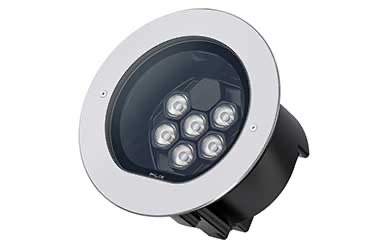

Most lighting decisions start with the fixture. Beam angle, output, IP rating, installation depth. The physics follows later, usually after the installed result fails to match the design intent.
This post starts earlier. With what light actually is, how it behaves before it reaches any surface, and what happens when water enters the equation. If you work with pool lighting, fountains, or architectural water features, this is the foundation everything else is built on.
As part of our commitment to lighting education, we publish short educational videos on YouTube covering these exact principles, from light physics to underwater design decisions. This post brings those ideas together in one place, with links to each video throughout.
Light Is Behavior, Not Just Brightness
Before optics, before beam angles, before luminaires, there is behavior.
Light is electromagnetic radiation the human eye can perceive. It travels without a medium, moves freely through space, and reacts only when it meets matter. Its color is defined by wavelength. What we perceive as white light is a mixture of many wavelengths arriving simultaneously.
Lighting design begins here. How light spreads, reflects, absorbs, scatters, or shifts is entirely determined by what it encounters: the material, the surface, the medium. Understanding this changes how you specify, and what you specify.
What Water Does to Your Beam
The beam you design in air produces a different result underwater.
Water is an active participant in every underwater lighting result. Three physical processes define what happens the moment light enters water.
Reflection affects perceived brightness on the surface and surrounding architecture. Refraction shifts the beam angle and redistributes light in ways the spec sheet cannot predict. Absorption strips warm wavelengths progressively with depth, which is why white light reads cooler below the surface.
These are physical realities, present in every underwater installation. Knowing these three principles allows you to anticipate the result before installation and deliver exactly what was designed.
Why Your Beam Changes Underwater
Pool Finish Is a Lighting Decision
The finish defines how light behaves inside the pool, alongside how the pool looks.
Light finishes reflect more light back toward the surface and surrounding areas, producing a brighter, cleaner, more open atmosphere. Dark finishes absorb light, generating depth, stronger contrast, and a calmer, more dramatic environment.
This choice shapes the entire experience of the space at night. Designers who treat finish as secondary often find that additional fixtures cannot compensate for what a poor finish decision has already determined.
How Pool Finish Affects Light and Atmosphere
Fixture Depth Shapes the Entire Visual Result
Two identical luminaires, same output, same beam angle, placed at different depths will produce completely different visual results.
Shallow placement keeps the beam sharp, defined, and visually strong. Deeper placement softens the beam, diffuses contrast, and creates a more ambient effect with reduced intensity. Depth also controls source visibility. At certain depths the fixture disappears entirely, leaving only the effect. At greater visibility the source becomes a glare point and draws attention away from the design.
Experienced designers start with the intended effect and work backwards to determine the depth that produces it.
Why Fixture Depth Changes Everything
Design What You Can Predict
Underwater lighting rewards designers who understand the physics behind it. Water reflects, refracts, absorbs, and filters. The finish amplifies or dampens the effect. The depth determines whether the result reads as dramatic or ambient, intentional or accidental.
When these variables work together by design, the results become predictable and repeatable. That level of control separates designers who plan the outcome from those who react to it after installation.
We regularly publish free educational YouTube Shorts on lighting physics, underwater design, and architectural lighting, built specifically for designers, architects, and specifiers who want the knowledge behind the product.
-
 10 August 2026
Engineering Confidence: The Story Behind Filix
-
01 August 2026
FILIX RDT200 Named Most Innovative Product
-
15 April 2026
6 Months in the Adriatic. Zero Failures.